FOX Health

Archive for the ‘Allergy Alert’ Category

Are You Allergic to Mosquito Bites?

Thursday, July 9th, 2009

Dr. BassettEach year millions of us have the not so enjoyable experience of getting bitten by a mosquito, especially during the summer months almost everywhere! Are there more mosquitos or more of us getting bitten? Yup, according to a recent study which found a three fold increase in bites over the past decade or so?  This could be just another effect of global warming. 

What is the reason why some of us experience a larger reaction (increased area of swelling and redness at the bite site) vs. those who seem to have pretty low key reactions? The answer may be in whether or not you are sensitive to the proteins present in the insect’s saliva; hence you are allergic to mosquito bites!

There are a variety of reactions mosquito bites may cause, varying from a small amount of redness, swelling and itchiness, all the way up to those who experience extensive redness and swelling.  Rarely, a full blown generalized allergic reaction (Skeeter’s syndrome) can be seen as well.  In fact one of my patients recently required emergency department treatment, including intravenous medication for a severe reaction to her bites. 

Get tested for mosquito allergy!

Recently, I have begun performing an in-office, quick, simple skin test to determine if you are truly “allergic” or sensitive to mosquitoes.   Always consult with your health care provider if you experience large generalized reactions after getting bitten by a mosquito, or another insect.  Evaluation is mandatory for those who have experienced a generalized allergic type reaction to any biting, or stinging insect.   Be prepared if you seem to get lots of bad mosquito bites.  Have a mosquito bite treatment plan in place.

An ounce of prevention is worth a lot.

That means defensive measures really work and may give you a leg up in avoiding “the bite!” First, those who smell nice (use scented products) and sweat a lot may be more attractive to mosquitoes.  Second, prime biting times are usually dawn and dusk.  Third, wearing long sleeves and pants (tucked in to shoes) reduces exposed areas, particularly if you will be hiking or walking in a wooded area. 

How to repel

There is a variety of DEET-containing insect repellent products ranging from a concentration of 5-10 percent, all the way up to 30-40 percent.  The strength of the DEET will dictate how long (hours) you may remain “bite-free.”  Alternatively, natural (eucalyptus oils, etc) insect repellent products are available.  Use these products as directed on the label.

Now if you are unlucky and get bitten, bite treatment can provide significant relief.  Cleaning the area of the bite is essential, and using an over the counter or a prescription strength steroid cream will reduce itch and localized discomfort.  Remember, a cool ice compress will also reduce swelling.

Hope this helps to keep you bite free, and take the “sting” out of summer!

Dr. Clifford W. Bassett is an assistant clinical professor of medicine at the Long Island College Hospital and on the faculty of NYU School of Medicine. He is the current vice chair for public education committee of the American Academy of Allergy, Asthma and Immunology. No information in this blog is intended as medical advice to any reader or intended to diagnose or treat any medical condition.

FDA Warns of Zicam Danger

Wednesday, June 17th, 2009

Dr. BassettCan’t smell the flowers? Many individuals with colds as well as allergies frequently suffer with a variety of familiar symptoms such as sneezing, runny and drippy nose.  Sufferers often reach out for various over-the-counter remedies to alleviate symptoms. 

Yesterday, the FDA advised people not to use three Zicam Cold Remedy intranasal products:  Zicam Cold Remedy Nasal Gel, Zicam Cold Remedy Gel Swabs and Zicam Cold Remedy Swabs, Kid’s Size.  They are used as non-prescription homeopathic treatment for colds in adults and children 3 years of age and older. The FDA indicated there were more than a hundred reports of anosmia (a loss of sense of smell) associated with use of these Zicam products. 

The FDA advised: “Consumers should stop using these products immediately and should discard or return them.”   The complete release can be found on the agency’s Web site.

If you have lost your sense of smell, it’s important to contact your health care professional for evaluation.  Some individuals may experience this condition as a result of a common cold or sinus infection, which is generally temporary, as well as in other conditions, such as aging.

Dr. Clifford W. Bassett is an assistant clinical professor of medicine at the Long Island College Hospital and on the faculty of NYU School of Medicine. He is the current vice chair for public education committee of the American Academy of Allergy, Asthma and Immunology. No information in this blog is intended as medical advice to any reader or intended to diagnose or treat any medical condition.

Can Fruits and Other Foods Trigger an Allergy Attack?

Wednesday, June 10th, 2009

Dr. BassettOh yes — at least one third of seasonal allergy sufferers may have “oral allergy syndrome” —characterized by itchiness of the mouth, lips and throat, as well as the familiar sniffles and sneezing, after ingestion of various fresh fruits, vegetables and even nuts that cross react with tree, grass and weed pollens.

So what can you do? Well in many cases peeling, cooking and heating the fruits can reduce the likelihood of triggering seasonal allergy symptoms.  In some cases, the symptoms caused by the cross reaction are more likely during the height of the pollen season for that allergen.  That is spring time for seasonal tree and grass pollens in many areas of the U.S., and weed pollens usually during summer and early fall. 

So if you are sensitive to tree pollens you may react when eating apples, cherries, pears, apricots, kiwis, oranges, plums, almonds, hazelnut and walnuts.  I have actually seen some individuals with seasonal spring tree pollen allergies react to hazelnut flavored coffee!

Grass pollen may cross react with melon, tomato and orange.  Those who are sensitive to ragweed and weeds may react when ingesting banana, cantaloupe, cucumber, zucchini, watermelon and even chamomile tea!

Obviously having your seasonal allergy symptoms under control requires planning and often encourages my patients with seasonal allergies to develop an allergy action plan.  This way by following the allergy season calendar for your area and knowing the pollen count (go to www.aaaai.org/nab), you will be better prepared for those pesky allergy symptoms before they even begin!

Dr. Clifford W. Bassett is an assistant clinical professor of medicine at the Long Island College Hospital and on the faculty of NYU School of Medicine. He is the current vice chair for public education committee of the American Academy of Allergy, Asthma and Immunology. No information in this blog is intended as medical advice to any reader or intended to diagnose or treat any medical condition.

The Do’s & Don’ts of Sensitive Skin

Wednesday, June 3rd, 2009

Dr. BassettMany of my patients have a variety of questions regarding their skin care, especially those with sensitive skin.  I recently sat down with my colleague Dr. Bobby Buka, section chief of the department of dermatology at Mt. Sinai School of Medicine, and discussed various steps you can take to improve your skin’s health AND appearance if you have sensitive skin. 

Don’t over do it!
Dr. Buka feels a balance of skin care products is the key and not to “overdo it” with too many different lotions and facial care treatments — especially if you have sensitive skin.  “Too many of my patients end up with ‘itchy red bump syndrome,’ a condition that results from putting too much stuff on your face,” says Dr. Buka.  He further explained how the skin’s delicate balance can be upset by well-intentioned patients who apply more than 3 products to the face at the same time. His rule of thumb is to use no more than 3 items per application.  Your skin can’t possibly absorb more than 3 products anyway, so Dr. Bukka says chill out, 2-3 targeted items to the skin’s surface are plenty.

Some patients who also have seasonal or year-round allergies, as well as sinus problems, may also experience below eyelid puffiness or “shiners” that can wreak havoc with your appearance. When those affected are actually tested, many individuals have allergies as well as possible contact or skin allergy to products used in the eyelid and facial areas. Covering up these dark circles with facial cosmetics (foundation, etc.) won’t fix the problem.  Dr. Buka and I often collaborate to develop a long-term solutions patients with sensative skin-related issues.  

Drink up!
Finally, stay hydrated — this means what may seem like a massive amount of water each day — 8 glasses! So drink up, your skin and (your internal organs) will thank you for it.  But sensitive skin or not, protection against UV rays remains the single most important thing you can do to protect your skin and delay the signs of aging! Dr. Buka and I recommend SPF 30 or higher for patients — not only when planning to spend the day outside, but also as part of their daily skin regimen.  So get out there and take charge of your sensitive skin care for optimal health, and look better!

Dr. Clifford W. Bassett is an assistant clinical professor of medicine at the Long Island College Hospital and on the faculty of NYU School of Medicine. He is the current vice chair for public education committee of the American Academy of Allergy, Asthma and Immunology. No information in this blog is intended as medical advice to any reader or intended to diagnose or treat any medical condition.

Food Allergy Awareness

Thursday, May 7th, 2009

Dr. BassettAre food allergies really on the rise?  Well it is estimated that up to 6 percent of young children and 3-4 percent of adults in our country have food allergies.  There are recent studies looking at a rise in the prevalence of food allergies over the past several decades.  In fact, the rate of peanut allergy doubled in children over a five year period.  In one study, only half the adults affected with severe food-allergic reactions sought any evaluation of this condition by a medical professional. 

Over the years, Food Allergy and Anaphylaxis Network (FAAN) have been at the forefront of progress in food allergy research. Findings from research studies have been used to change federal and state laws, improve school policies, raise public awareness, improve the daily lives of individuals with food allergy, and provide education for patients, caregivers and health care providers.

One recent study looked at the failure of many schools throughout the country in having a food allergy action plan in place for food-allergic children, as well as ways to improve on them, by working with your local allergist. 

In 1997, Food Allergy and Anaphylaxis Network (FAAN) created Food Allergy Awareness Week to educate others about food allergies.  Spread the word about the 12th annual Food Allergy Awareness Week (FAAW), May 10-16, 2009. This year help those with food allergies “Take Action, Prevent Reactions.” Mark the week this year by working to increase awareness at schools, talk to your elected representatives, and plan a fundraiser. You can hand out fliers, put up posters, or display educational materials.  Make it a time to learn more about food allergies and prevention strategies, as well as preparedness at home, at school and at camp.

FAAN has also promoted the “Be a PAL: Protect A Life™ From Food Allergies” program that is designed to educate parents and educators, and teach students about food allergies and how to help their friends and classmates who may have food allergies.

The basic tenets of the PAL program designed to keep food-allergic kids safer are:

  • Food allergies are serious. Don’t make jokes about them.
  • Don’t share food with friends who have food allergies.
  • Wash your hands after eating.
  • Ask what your friends are allergic to, and help them avoid it.
  • If a friend who has food allergies becomes ill, get help immediately!

And lastly, FAAN is also sponsoring a Food Allergy Walk this year in a community near you.  The goals of this program are to increase awareness of food allergy. The walk is “to provide understanding, hope and an opportunity for a child with food allergy to simply be a child!”

Dr. Clifford W. Bassett is an assistant clinical professor of medicine at the Long Island College Hospital and on the faculty of NYU School of Medicine. He is the current vice chair for public education committee of the American Academy of Allergy, Asthma and Immunology. No information in this blog is intended as medical advice to any reader or intended to diagnose or treat any medical condition.

First Family & the Quest for a ‘Hypoallergenic’ Dog

Wednesday, April 15th, 2009

Dr. BassettThe search for a “presidential dog” has dominated the headlines since President Obama’s campaign.  It has been reported that President Obama’s 10-year-old daughter, Malia, is allergic to dog hair, and thus starts the search for a “hypoallergenic” dog.  Many of my patients find themselves with the desire to have a pet, despite a pet allergy as well. 

There is a myth that pet allergies are caused by animal hair!  It is actually a protein found in pet skin/dander, saliva and urine that causes the allergy.  Hairless dogs are still going to have at least some allergen. Some dog breeds, are said to be “hypoallergenic,” as they shed less, but no dog breed is completely 100 percent hypoallergenic.  

In some cases, there are individual differences between breeds, and a particular pet allergy sufferer may do better with one breed as compared to another.  Lastly, it has been postulated that perhaps female dogs might produce less animal allergen, but the jury is still out on this one! 

You may look for breeds with shorter hair and less shedding, although there isn’t any real scientific evidence this will really help.  Some allergists have also advocated that there may be an advantage to keeping a dog that tends to keep their coat throughout the year. Also, there is a consideration to selecting a smaller dog, as these animals may shed less dander than a bigger dog.  Other factors discussed are the animal’s temperament or disposition that might make frequent bathing more feasible.

Tips that can help reduce dog allergy suffering:

• Create a pet-free bedroom

• Wash bedding in hot water

• Bathe your dog frequently and have a non-allergic family member perform grooming

• Use a HEPA air purifier, double bag and/or HEPA vacuum cleaner/home A/C,  and as well as vacuuming carpets, cleaning walls

• Shampoo carpeting frequently or better yet, go with wood or washable tile/linoleum flooring

• Increase time your pet spends outside, when the weather allows
 
• Visit an allergist to discuss treatment options
 
Nevertheless, there are no guarantees that an individual who is truly allergic to pets (about 10 percent if those with allergies) will tolerate living with a pet dog or cat.  What I have found helpful is actually trying out a pet on a “temporary or trial basis” for a future pet, to ensure a successful ending to this story.  An even better strategy is to begin allergy treatment before getting a pet if you are allergic, including allergy injections! 

For more information on pet allergies go to: http://www.aaaai.org/media/news_releases/pressrelease.asp?contentid=8326

For for home and animal allergy management tips check out: http://www.allergyandasthmarelief.org/animal_allergens.html

Dr. Clifford W. Bassett is an assistant clinical professor of medicine at the Long Island College Hospital and on the faculty of NYU School of Medicine. He is the current vice chair for public education committee of the American Academy of Allergy, Asthma and Immunology. No information in this blog is intended as medical advice to any reader or intended to diagnose or treat any medical condition.

Allergy Countdown: The Battle of the Sexes (of Plants)

Thursday, April 2nd, 2009

Dr. BassettSo what is in the air? Look out for seasonal tree pollens now wherever you are and learn more about these allergy culprits that are likely to be not only in your backyard — but also in your nose and eyes!  

Plant pollens such as trees, grasses and weeds are not the only allergens that affect the us while working in the garden. Many mold spores also affect people in the outdoors, seasonally, or even year round.

If there is an existing pollen problem in your landscape, replace that plant with a less allergenic selection.  A system that may help you do this and indicates the likelihood of a plant’s potential to cause allergy is the Ogren Plant Allergy Scale.

A pollen-producing tree in your own yard will expose you to up to ten times the amount of pollen as would the same tree planted just down the block from your home! 

Here are some more allergy sufferer’s tips for you and your yard:

  • Wear a pollen mask while gardening
  • Keep grass cut short
  • Avoid touching your eyes and nose while gardening
  • Plan outdoor time for rainy, wet, cloudy and windless days — which usually have lower pollen counts
  • After yard work, leave your clothing outside of your bedroom, brush off your shoes and rinse your glasses. Also, wear gloves to minimize local contact and reduce irritation to the skin of your hands and arms
  • Limit your gardening to short intervals on “high” pollen days
  • If you are allergic to mold spores, avoid damp places and stagnant water
  • Proximity and location of pollen-producing trees, shrubs and plants will affect your exposure to seasonal allergens
  • Planting female trees in one’s own yard may trap incoming airborne pollen from male plants

Other resources are www.aaaaai.org and www.allergyandasthmarelief.org

Happy planting!

Dr. Clifford W. Bassett is an assistant clinical professor of medicine at the Long Island College Hospital and on the faculty of NYU School of Medicine. He is the current vice chair for public education committee of the American Academy of Allergy, Asthma and Immunology. No information in this blog is intended as medical advice to any reader or intended to diagnose or treat any medical condition.

Should You Smell the Flowers?

Wednesday, March 25th, 2009

Dr. BassettThe first step is to reduce outdoor seasonal “triggers” by identifying the plants and flowers that will cause you discomfort. Get tested to choose the “right” plants, shrubs and flowers that are better for you. By knowing your allergies you can also plan ahead and modify your gardening schedule. This involves having the knowledge regarding peak periods throughout the day to the culprit allergens as well as staying tuned to learn the pollen count in your town or city.

Pollen counts from the previous day are available for main cities via the American Academy of Allergy, Asthma and Immunology (AAAAI) as well as in local newspapers and with the daily weather reports on radio and TV. The Web site for the National Allergy Bureau is www.aaaai.org/nab.

You may need to adjust your planting and/or gardening activities as seasonal symptoms such as itchiness of the eyes, nose and throat, sneezing may be worse on windy, dry, sunny and clear days may be associated with greater airborne pollens as wet, cloudy and windless days can see a reduction in outdoor plant pollens.

Colorful flowers:
Plants with bright, showy flowers are better for people who have allergies. Their pollen is large and because they are pollinated by insects, the pollen is seldom airborne. Plants that cause allergies usually have flowers that are small and insignificant looking and have no color for attracting nectar.

The following trees, shrubs, and plants have been found to be BETTER for people with allergies:

Alyssum
Apple
Azalea
Begonia
Cacti
Cherry
Clematis
Columbine

Crocus
Daffodil
Dahlia
Daisy
Dogwood
Dusty Miller
Geranium
Hibiscus


Hyacinth
Hydrangea
Impatiens
Iris
Lilac
Lily

Magnolia
Narcissus
Pansy
Pear
Petunia
Phlox
Plum
Roses

Salvia
Snapdragon
Sunflower
Tulip
Verbana
Viburnum
Zinnia

If you are considering adding trees to your landscape, you should AVOID planting the following:

Alder
Ash
Aspen
Beech
Birch
Box Elder
Cedar

Cottonwood
Cypress
Elm
Hickory
Juniper
Mulberry
Oak

Olive
Palm
Pecan
Poplar
Sycamore
Walnut
Willow


Dr. Clifford W. Bassett is an assistant clinical professor of medicine at the Long Island College Hospital and on the faculty of NYU School of Medicine. He is the current vice chair for public education committee of the American Academy of Allergy, Asthma and Immunology. No information in this blog is intended as medical advice to any reader or intended to diagnose or treat any medical condition.

For Your Eyes Only!

Thursday, March 12th, 2009

Dr. BassettWith allergy season just around the corner, let’s take a minute to review some early tips to help you survive allergy misery.  Many sufferers have allergy symptoms that affect your eyes and eyelids and can be quite troublesome. Allergy medications may often work better if you start them just before the season begins. 

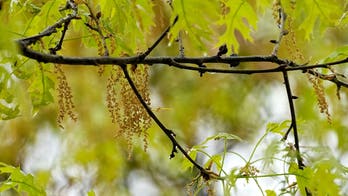
Right now, we are seeing early tree pollens such as juniper, cedar, elm, alder and maple in many regions of the country.  The late winter pollens cause “early” spring suffering even before the trees grow leaves! 

Here are a few practical tips:

• LIDS OFF: Gently irrigate your eyelids (while your eyes are closed) with a mild, tear-free “baby” shampoo to remove excess allergens and pollutants which may have accumulated.  Check with your provider (especially if you wear contact lenses or have other eye problems) to learn whether anti-allergy eye and/or moisturizing drops may also be helpful and safe.

• BLOCK YOUR EYES: Wear sunglasses to block pollens from entering and getting into your eyes.

• WASH WISELY:  Rinse off your eyeglasses and shower and shampoo your hair every night to remove allergy causing pollens that collect during the day.

Stay tuned for more late-breaking successful seasonal allergy survival tips to come …

Dr. Clifford W. Bassett is an assistant clinical professor of medicine at the Long Island College Hospital and on the faculty of NYU School of Medicine. He is the current vice chair for public education committee of the American Academy of Allergy, Asthma and Immunology. No information in this blog is intended as medical advice to any reader or intended to diagnose or treat any medical condition.

The Future of Peanut Allergy Treatment

Friday, March 6th, 2009

Dr. BassettResearchers from Addenbrooke Hospital in Cambridge, England reported in this month’s edition of the journal, Allergy, that by studying a small group of peanut-allergic children, they have found a possible way of reducing the risks associated with accidental peanut ingestion.

The study authors pointed out that an allergy to peanuts may affect the entire family, particularly when a child has a food allergy.  Families affected by food allergies have a great deal of pressure put upon them, as well as anxieties associated with this condition.

How to cope with food allergies:

Eating out of the home requires planning and education to avoid an allergic reaction.  I often tell my patients to be a “label detective” and understand food labels ― or when dining out, present a “food ingredient card” to the server or kitchen staff to alert them, in order to reduce unwanted exposure to peanuts and other food allergens.  Don’t forget to always ask questions about ingredients and food preparation if you have a history of food allergies.

Bottom line: the only 100 percent successful treatment for food allergies in 2010, is education, prevention and avoidance, as well as preparedness for possible allergic reactions. There is a great need for more research as it is too soon to know whether this approach will ultimately work for the many millions with allergies to peanuts and nuts! 

Check out some additional strategies as well as one of the upcoming food allergy conferences taking place this year hosted by the Food Allergy and Anaphylaxis Network at:  http://www.foodallergy.org/conferences.html

Dr. Clifford W. Bassett is an assistant clinical professor of medicine at the Long Island College Hospital and on the faculty of NYU School of Medicine. He is the current vice chair for public education committee of the American Academy of Allergy, Asthma and Immunology. No information in this blog is intended as medical advice to any reader or intended to diagnose or treat any medical condition.

Close
E-mail It