FOX Health

Posts Tagged ‘vitamin d’

Goodbye Summer, Goodbye Vitamin D

Monday, November 2nd, 2009

tanya_zuckerbrot2The familiar chill of fall reminds us that we’re seeing less of the sun.  Less sunlight means fewer opportunities to maintain adequate levels of vitamin D in our bodies.   With all the buzz surrounding calcium, the importance of vitamin D in supporting strong teeth and bones was long overlooked.  So let’s spend a few minutes getting up to speed on calcium’s biggest supporter, vitamin D. 

Vitamin D is a fat-soluble vitamin that is naturally present in few foods, fortified in few others, and available as a dietary supplement.  Additionally, our bodies can synthesize vitamin D with adequate sun exposure. The process begins with the inactive form of vitamin D in our skin.  When met with sufficient sunlight, the hormone is converted into an active form of vitamin D through a process in our kidneys and liver.  Active vitamin D allows our bodies to better utilize calcium, meanwhile playing an important role in maintaining muscle.  Thus, vitamin D has been credited with the prevention of falls and subsequent fractures in aging populations.


Groups at higher risk of vitamin D deficiency include older adults, people with limited sun exposure (which would include most Americans in the winter months), people with dark skin, obese individuals, and breastfed infants.  So how much do you need?  The jury is still out on this one.  Current recommendations suggest the following daily intake:

- Age 50 and under:  200 International Units (IU) or 5 micrograms (mcg)
- 51-70:  400 IU (10 mcg)
- 71 and older:  600 IU (15 mcg)

That said, research suggests these intakes are too low, with some researchers estimating as high as 1000 IU per day.  In other words, it’s best to think of the current recommendations as minimums. 

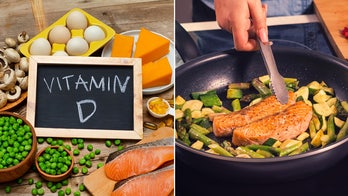
Below is a list of food sources of vitamin D.  As you can see, foods that naturally contain vitamin D aren’t common in the American diet, and those that are fortified with vitamin D (most notable being milk) are not very rich sources. So unless you typically consume a tablespoon of cod liver oil daily, or drink upwards of 48 ounces of milk, it’s best to leave it to supplementation. 

Sources of vitamin D:

Food IUs per serving
Cod liver oil, 1 tablespoon 1,360
Mushrooms, enriched with vitamin D, 3 ounces 400
Salmon, cooked, 3.5 ounces 360
Mackerel, cooked, 3.5 ounces 345
Tuna fish, canned in oil, 3 ounces 200
Orange juice fortified with vitamin D, 1 cup (check product labels, as amount of added vitamin D varies) 142
Milk, nonfat, reduced fat, and whole, vitamin D-fortified, 1 cup 98
Yogurt, fortified with 20% of the DV for vitamin D, 6 ounces (more heavily fortified yogurts provide more of the DV) 80
Margarine, fortified, 1 tablespoon 60
Ready-to-eat cereal, fortified with 10% of the DV for vitamin D, 0.75-1 cup (more heavily fortified cereals might provide more of the DV) 40
Egg, 1 whole (vitamin D is found in yolk) 20
Liver, beef, cooked, 3.5 ounces 15
Cheese, Swiss, 1 ounce 12

Source: http://ods.od.nih.gov/factsheets/vitamind.asp

For more information, check out the National Institutes of Health Office of Dietary Supplements website. 

Tanya Zuckerbrot, MS, RD is a nutritionist and founder of www.Skinnyandthecity.com.    She is also the creator of The F-Factor Diet™, an innovative nutritional program she has used for more than ten years to provide hundreds of her clients with all the tools they need to achieve easy weight loss and maintenance, improved health and well-being.  For more information log onto www.FFactorDiet.com.


Live To Be 100

Thursday, June 25th, 2009

tanya_zuckerbrot2Studies show that certain foods can increase your chances of longevity by decreasing the risk factors associated with the top diseases plaguing Americans.  Here are some tips to increase your chances of living longer.

BEANS:

There are 23.6 million children and adults in the United States. While an estimated 17.9 million have been diagnosed with diabetes, unfortunately, 5.7 million people (or nearly one quarter) are unaware that they have the disease.

Studies have shown that people who eat a high-fiber diet lowered their risk of diabetes by 30 percent. Foods high in fiber take longer to digest, which means that insulin is created slowly, preventing blood sugar spikes.

PISTACHIOS:

About 400 million people around the world are classified by the World Health Organization as obese. In a study done by Swedish researchers, men who had been overweight at 18 were one third more likely to die prematurely compared to their normal-weight peers. The study of 45, 920 men over an average 38 years underlines the dangers of being overweight and the need to tackle a growing obesity epidemic.

This nut can help! Pistachios are known as “the skinny nut” because they contain two key nutrients which help stave off hunger: Fiber and protein. Pistachios are loaded with omega-3 fatty acids as well. Omega-3’s prevent platelets in the blood from clumping together and sticking to arterial walls in the form of plaque. They also drive down triglycerides and LDL cholesterol. Researchers suspect that omega-3’s may block the production of inflammatory substances linked to arthritis and lupus.

Get cracking! Whether you’re at the office, ballpark or hanging with the guys, stick with pistachio nuts.

EDAMAMES:

Prostate cancer is the most common type of cancer found in American men, other than skin cancer. Prostate cancer is the second leading cause of cancer death in men. One out of every six men will get prostate cancer during his lifetime, and one out of every 35 men will die of this disease.

Researchers from Japan’s National Cancer Center found that increased intake of soy isoflavones significantly reduced the risk of prostate cancer in men by as much as 50 percent.  Soy isoflavones help reduce testosterone, which is the hormone that may increase prostate cancer risk.

While dining with your wife or taking your family out for Japenese food, order some edamame to the table, which are boosting with soy. If that’s not your thing, opt for the miso soup.  If you’re in the car, grab a Soy Joy, which is not only packed with healthy soy proteins, but filled with essential vitamins and minerals.

COFFEE:

Alzheimer’s disease is the leading cause of dementia among the elderly. As of February 2009, as many as 2.4 to 4.5 million Americans are living with Alzheimer’s.

Is your morning cup of joe what gets you through the busy work day? According to the April, 2009 publication of Tufts Newsletter, a new study by Finnish and Swedish researchers reported that people who drink between three to five cups of coffee a day in midlife could be cutting their risk of Dementia/Alzheimer’s disease by 65 percent.

Some studies have also shown that coffee helps protect the nervous system, which can also protect against dementia.  Due to the fact that the average American drinks more than three and half cups of coffee daily, these results can have imperative implications for the prevention or delay of the onset of dementia/Alzheimer’s disease.

If three cups of coffee seems like one-too-many for you, don’t worry — have a skim cappuccino with breakfast or dessert, or grab an iced latte mid-afternoon. These sweet coffee treats will get you through the day. 

ALCOHOL:

Cardiovascular disease (CVD) is the No. 1 cause of death in the United States today. Seventy million Americans suffer from some form of CVD. 

A study by Harvard University researchers suggests that, moderate drinking was associated with a lower risk of heart attack. Those who had one-half to two drinks a day had the lowest heart attack risk — 40 percent to 60 percent lower than healthy men who didn’t drink. And that was true no matter whether they were drinking beer, wine or liquor. In addition, in a recent British study, they found that moderate alcohol consumption along with a healthy lifestyle added 14 years to life, compared with men and women who did not adopt these behaviors.

Do we need to say how to incorporate more alcohol in your diet? Just don’t get carried away doing shots with the guys.

SKIM MILK:

Both genetic and environmental factors play a role in multiple sclerosis (MS), a neurological condition that affects 2.5 million people worldwide.

Consuming sources of vitamin D like skim milk, eggs and sardines will help reduce the risk factors associated with MS.  According to researchers at Oxford University, northern countries, which have less sunlight, tend to have a higher incidence of MS. The study proves that vitamin D controls the activity of a gene that increases the odds of MS. Vitamin D attacks the fatty sheath that insulates the nerve fibers in the brain and spinal cord, reducing one’s risk of MS.

Switch from whole milk to skim milk and save on almost half the calories and eight grams of fat. Add skim milk to your coffee, smoothies and cereal bowls.

ONIONS:

According to researchers at the University of California’s School of Public Health, the healthiest people were those who consumed substantial dietary vitamin C on a daily basis.

There has been more research about the immune-boosting effects of vitamin C than perhaps any other nutrient. Vitamin C increases the production of infection-fighting white blood cells and antibodies, as well as levels of interferon — the antibody that coats cell surfaces, preventing the entry of viruses.

What’s a burger without sautéed onions?? Grill up some onions for your burgers and steaks and eat your way to a healthier life.

BANANAS:

Until the age of 55, more men suffer from high blood pressure than do women.

Research suggests that foods rich in potassium can reduce the risk of high blood pressure and stroke. The evidence is so convincing that the Food and Drug Administration recently allowed food labels to bear a health claim about the connection between potassium-rich foods and blood pressure.

Not only are bananas an amazing post-workout snack, but they are great to eat any time of day. Slice up some bananas into your morning bowl of oatmeal or cereal.  Blend bananas into a fruit smoothie or as a delicious dessert, or enjoy dark chocolate frozen bananas.

CHOCOLATE:

High cholesterol puts men at increased risk for heart attacks, strokes and peripheral artery disease. For many men, the risk of high cholesterol starts in their 20s and increases with age. High cholesterol tends to run in families, so obviously genes play a role. But a variety of lifestyle factors also affect cholesterol levels ― including diet, activity level, and body weight

According to Dutch researchers, men whom consumed cocoa lowered their risk of dying from heart disease by 50 percent compared to those who did not eat cocoa. Cocoa contains chemicals called flavanols, which have been linked to lower blood pressure and improve function of the cells lining the blood vessels.

How exciting is this? Something that you grew up on can actually help reduce your cholesterol! 

Tanya Zuckerbrot, MS, RD is a nutritionist and founder of www.Skinnyandthecity.com.    She is also the creator of The F-Factor Diet™, an innovative nutritional program she has used for more than ten years to provide hundreds of her clients with all the tools they need to achieve easy weight loss and maintenance, improved health and well-being.  For more information log onto www.FFactorDiet.com.

Cancer Q&A: Farrah Fawcett’s Battle

Tuesday, May 12th, 2009

109_coomerThe topic of anal cancer has gotten a lot of media attention lately because of Farrah Fawcett’s very public battle with the disease. And it’s raised a lot of important questions about advances in cancer treatment and the future for patients fighting the battle of their lives.

tanya_qWhat is anal cancer and who is at risk for it?

tanya_aAnal cancer is characterized by the growth of a tumor around the anus ― which is opening at the end of the intestinal tract — and it’s completely different from colon cancer. A large proportion of anal cancers have tested positive for human papillomavirus (HPV), which is a sexually transmitted disease, but this isn’t the only cause.

Other patient populations at a greater risk for developing anal cancer include patients with multiple sexual partners, those who participate in anal intercourse, smokers, people with immunosuppressive diseases, such as HIV, and people with chronic inflammatory bowel diseases.

———————————————————————————————————————————-

tanya_qWhat is the treatment for anal or intestinal cancer?

tanya_aIf it’s caught early, the most common treatment for anal cancer is surgery. But in patients whose cancer affects the anal sphincter, having surgery to remove the tumor and cancerous cells can lead to fecal incontinence causing the need for a permanent colostomy. So often for these patients, radiation and chemotherapy may be the preferred course of treatment. For later stage anal cancers, doctors treat patients with a combination of radiation and chemotherapy.

———————————————————————————————————————————–

tanya_qWhat is the cure rate for anal cancer?

tanya_aWell ― like any cancer, early detection greatly increases the chance of survival. If it’s caught in the early stage, there is an 86 percent five year survival rate. If the cancer has spread to the lymph nodes, the survival rate decreases to 54 percent. Up to 10 percent of patients treated for anal cancer will develop cancer elsewhere in the body.

———————————————————————————————————————————–

tanya_qWhat kind of advances are we making in cancer research?

tanya_aWe have made advances with regard to the surgical treatment of cancers by offering minimally invasive surgeries. In some cases, we’re able to provide surgical treatments with less negative side effects and shorter recovery time. Clinical studies have shown that other treatments like radiation and chemotherapy may be just as effective as surgery without many of the negative side effects.

With regard to medical treatments, there have certainly been advances in the kinds of treatments we’re using. New medical technologies are making it possible for doctors to individualize a patient’s treatment by studying the genetic makeup of their particular cancer — ultimately decreasing the chances of recurrence or spread of the cancer, and increasing a patient’s survival outcome.

———————————————————————————————————————————-

tanya_qWhat are the major milestones/accomplishments we’ve seen in cancer research recently?

tanya_aWell again, one of the major milestones is being able to identify the genetic makeup of cancers individual to each patient.

The other advancement is the research that’s been done in molecular-targeted therapies. These therapies target the development of cancers by inhibiting the growth of the disease at the cellular level — which we hope will be able to limit or potentially even stop the cancer from spreading.

Molecular-targeted therapy is a more specific treatment than chemotherapy, because chemo treatment kills off not only the bad cells — but also the healthy cells in the body. So with a therapy that is very specific in its attack of cancerous cells, the hope is that it should more be effective in stopping the development of the cancer.

———————————————————————————————————————————-

tanya_qWhat are some tips for preventing cancer?

tanya_aWe’ve all heard it time and time again — good health comes from making healthy choices. So my first tip would be stop smoking! I’m sure I don’t have to tell you, cigarettes are full of cancer-causing agents and have been linked to the development of many cancers in the body.

Second, everything in moderation including alcohol! If you’re the kind of person who enjoys a nice cocktail, make sure you do it in moderation, which means 1 or 2 glasses — preferrably of red wine — or else,  just avoid alcohol all together.

Make healthy dietary choices. Try to maintain a diet rich in omega-3 fatty acids and fruits and vegetables. Both provide essential nutrients and antioxidants which help ward off disease. Limit the amount of read meat you consume, since high levels of it have been linked to certain cancers.

Recent studies have shown that vitamin D may play an important role protecting against the development of certain diseases. Because exposure to small amounts of sunlight causes the body to produce healthy amounts of vitamin D, people who live in cold environments or places with extended seasons of darkness may want to consider getting their vitamin D levels checked and taking supplements.

And finally — know your family history so you can better determine your risk for other cancers, because your screenings for certain cancers may start earlier than what is recommended to the general population, and preventive therapies may be an option for you.

Dr. Cynara Coomer is an assistant professor of surgery specializing in breast health and breast cancer surgery at Mount Sinai Medical Center in New York City. She is a FOX News Health contributor providing medical expertise on a variety of topics in cancer research with a focus on women’s health, breast diseases and tips for healthy breasts at any age.

Secrets of Salmon

Monday, April 20th, 2009

tanya_zuckerbrot2Q: Is canned salmon, just as nutritious as the fresh kind?

A: On the downside, canned salmon contains more than six times as much sodium — 399 milligrams per 100 grams (about 3.5 ounces) as fresh salmon. Regrettably, some of the heart-healthy omega-3 fatty acids that salmon is praised for get lost in the canning process, so canned salmon has only about half the total amount of the two most important omega-3s EPA and DHA.

However, canned salmon contains many additional beneficial nutrients, not found in their fresh counterparts. The differences develop from how canned fish is processed, and from the fact that bones are included. One 3.5 ounce serving with bones contains two thirds as much calcium as a cup of milk, making this product one of the most calcium-rich, non-dairy foods. Canned salmon also has more vitamin D and phosphorus per serving than fresh salmon. Both canned and fresh salmon give you roughly the same amount of protein, 22-23 grams per 100 grams.
The American Heart Association recommends eating fish 3 times a week to reduce the risk for cardiovascular disease. Despite the fact that you’ll need to eat it more frequently to get enough omega-3s canned salmon can be a delicious and nutritious part of any diet. In addition, canned salmon costs less per serving than fresh, and canned products are an economically wise choice because they have a long shelf life. 

Below is a delectable recipe for you to enjoy:

Salmon Burgers
Ingredients:
• 1 14.75 – ounce can salmon
• 3-4 tablespoons Dijon mustard
• ¼ cup reduced- fat mayonnaise
• 3 tablespoons parsley
• 1/2 cup sliced green onions
• 2-3 tablespoons minced garlic
• ½ teaspoon salt
• ½ teaspoon pepper
• Pam nonstick cooking spray
• 4 Whole-wheat sandwich rolls
• lettuce
• tomato
•  onion

Directions:
1. Blend salmon, Dijon mustard, mayonnaise and parsley in a mixer.
2. Pour mixture into a bowl and add green onions, garlic, salt and pepper.
3. Form into four 1/2 – inch-thick burgers and chill for 2-3 hours.
4. Spray skillet with nonstick cooking spray over medium heat ,and sauté salmon burgers for 3 minutes per side or until cooked through.
5. Serve on tasted Whole Wheat Hamburger buns and top with lettuce, tomato and onion.

Serves 4

Nutrition Content:
Per Serving: 310 calories, 11g fat, 26g carbohydrate, 4g fiber, 27g protein, 1014mg sodium

Tanya Zuckerbrot, MS, RD is a nutritionist and founder of Skinnyandthecity.com.    She is also the creator of The F-Factor Diet™, an innovative nutritional program she has used for more than ten years to provide hundreds of her clients with all the tools they need to achieve easy weight loss and maintenance, improved health and well-being.  For more information log onto www.FFactorDiet.com.

Vitamin D Deficiency and Your Kids

Monday, October 20th, 2008

Here in America, we’ve become a society so worried about skin cancer, that we’ve overlooked some of the good things that the sun provides for us. One of those things is an improvement in our mood. Another is Vitamin D. But Vitamin D is also obtainable through food including oily fish, eggs, fortified cereals, milk and orange juice. It can also be taken as a pill or liquid supplement.

Vitamin D works directly on the cells in the body, affecting metabolism the way a hormone dose. It is an extremely important vitamin, and we are finding out just how important with each new study. Deficiencies can lead to bone softening disease (rickets short term, or osteoporosis long term), dementia, heart disease, diabetes, Multiple Sclerosis, some cancers, autoimmune diseases, and infections.

As we lather ourselves and our children with sunscreen, we increase our deficiencies. A recent study from Children’s Hospital in Boston revealed that 40% of infants were lacking in Vitamin D. Those especially affected had darker skin which interferes with absorption, or are from the Northeast, where there is less direct sunlight.

But the solution to the growing Vitamin D deficiency problem in our children is NOT to expose them to more sun. Supplying a liquid supplement by mouth is just too easy. The American Academy of Pediatrics has just wisely doubled the recommendation for infants and children to 400 IU daily. This amount is completely safe, and is the amount of Vitamin D found in a liter of infant formula.   

The problem, believe it or not, is worse for mothers who are breast feeding. When was the last time you heard a doctor say that breast milk was deficient in anything? The problem may come from mothers not having enough Vitamin D, which is then lacking in their breast milk. It may be easily correctable by administering supplements to breast-feeding mothers rather than their infants, but this has yet to be studied. In the meantime, the Boston study showed 10 times the amount of Vitamin D deficiencies in infants of breast feeding mothers as compared to those who used formula feeds. This is a huge discrepancy, especially when you consider how easy it is to supplement this essential vitamin.

So use sunscreen on your children’s skin, but at the same time consider giving them a daily drink of Vitamin D.

Dr. Marc Siegel is an internist and associate professor of medicine at the NYU School of Medicine. He is a FOX News Medical Contributor and writes a health column for LA Times, where he examines TV and movies for medical accuracy. Dr. Siegel is the author of “False Alarm: the Truth About the Epidemic of Fear” and “Bird Flu: Everything You Need to Know About the Next Pandemic”. Read more at www.doctorsiegel.com

Vitamin D: Breast Cancer Fighter?

Friday, May 16th, 2008

A new study found that breast cancer patients with low levels of vitamin D are more likely to die of the disease or have it spread than patients getting enough of the nutrient. 

The skin makes vitamin D from ultraviolet light. Too much sunlight can raise the risk of skin cancer.  But some doctors say small amounts – 15 minutes or so a few times a week without sunscreen – may be beneficial.

Close
E-mail It